Hunting reports are rolling in from happy hunters working our line of squirrel dogs. Just this week, we have news about the Gray line of mountain feist getting the job done in Virginia, Missouri, Pennsylvania and others!
We post nearly real time updates on Facebook: https://www.facebook.com/grayfeist
&
On our forum: http://graysfeist.proboards.com/
Here are a few highlights!
Wednesday, November 12, 2014
Monday, September 15, 2014
GET'N FEISTY available for download.
GREAT NEWS!!! We now have the Get'n Feisty video for sale online! Available to you for immediate download. Check it out. $15.
http://graysmountainfeist.com/?p=167
Wednesday, June 18, 2014
UKC Event in Maine
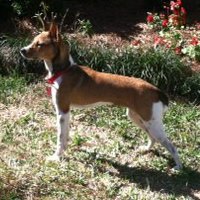
Last Saturday, we took the family to check out the United Kennel Club event hosted by the Pine Tree Coon, Cat & Bear Association. The only dog we brought with us was Gray's Prairie Daisy. The intention was to meet club members, introduce the breed to some new folks and show Danielle the big coonhounds. My hope was to talk to the membership about their rules about dogs that are silent on track, etc. Well, at the urging of one of the Club Officers, we entered Daisy into the Bench Show.
Daisy was up against some stiff competition from the females of other breeds, including a nicely-built English Coonhound. After some serious deliberation between the Master Of Hounds and the Apprentice he was training, we came out on top!
The UKC recognizes all feist dogs as "Treeing Feist." Daisy has been UKC registered since she was a little pup. We just haven't lived close enough to attend competitions in the past. Both her parents were NKC/UKC registered. I finished her dam to SQCH/Bench CH. Daisy is NKC/UKC/WTDA/AFBA registered. She now has points toward Squirrel Champion in WTDA and Bench Champion in NKC, UKC and WTDA. We could finish her out in multiple registries if we lived closer to squirrel dog hunts or wanted to spend a ton campaigning her. Daisy has what it takes and reproduces her traits well in her offspring.
We're proud of her Best Female win at the UKC event this weekend because it was not simply like we won class & breed because we were the only ones there. Everyone at the club was very cordial and welcoming. Jess and I look forward to taking our kids to the clubhouse again SOON!
Thursday, January 16, 2014
Squirrel Season Update
As avid small game hunters, let’s urge outdoor writers and
hunting media outlets to delve deeper into the topic of pursuing squirrels than
“they’re a great way to hone your skills for big game.” That tired line or some
reincarnation of it has been an annual cut and paste option for years. It’s
beyond worn out, wouldn’t you agree? We need thoughtful, insightful, honest
articles dedicated to squirrel hunting. Period.
Thanks to a decent hard mast crop over the past couple
years, the squirrel population across wide swaths of the US is plentiful. It remains
to be seen if we can overwinter animals to enjoy relatively high bushytail
numbers next fall. The 2013-2014 season has turned out to be a good one with
many reports coming in from across the country of successful hunts. The
plentiful squirrel level creates a situation where youth are more easily
engaged in the tradition of hunting because shooting opportunities abound and
outings are action-packed. Likewise, if you’re like me, a good squirrel year
makes training squirrel dog pups a breeze. Bountiful game is useful in tuning
up the skills of started dogs and assists in building their confidence.
I try to introduce at least a few new people of various ages
to hunting each year. One of the new participants, I am proud to say, if my
wife. Jess completed her Hunter Education Course and has jumped in with both
feet. She enjoys being in the timber, working dogs and of course – eating squirrels!
We’ve had a decent season ourselves despite being busy working professionals
with a young daughter and another child on the way. It’s always good to touch
base with old friends, make new ones and as I mentioned take folks new to
squirrel dogs out. One of our hunts we harvested 11 gray squirrels down in
Dinwiddie County, Virginia. The dogs did a great job as they generally do…It’s the
shooter’s fault most of the time! Another memorable trip was heading out to
hunt on our family farm in Missouri. Despite only a short period to hunt, in
the wind and extreme cold we were able to add 8 fox squirrels and 1 gray
squirrel to the game bag. Jess and I have had fun working young dogs this year.
Some states still have time in February to hunt. Remember, late
season is where a mountain feist or other squirrel dog breed can shine. It’s
difficult to pinpoint food sources and as squirrel populations fall, a good dog
can increase your success rate afield. A special note of appreciation is due
Mark Puckett (Small Game Coordinator) for the Department of Game & Inland
Fisheries for working with sportsmen and women to successfully extend the
squirrel season in Virginia. Increasing opportunities will hopefully lead to
increased participation in the great outdoors. I know that my family will be
out there. See y’all in the timber!
Wednesday, November 13, 2013
On the move!
![]() |
| Pugh's Sissy (daughter of Gray's Prairie Daisy) is going STRONG in Virginia. |
We've been busy working pups and keeping the more seasoned squirrel dogs in shape. Many happy hunters of Gray's Mountain Feist are sending in reports. Most pictures sent in to us may be viewed on our Facebook page: https://www.facebook.com/grayfeist
Also, don't forget to follow us on Twitter @GrayFeist
I have been in discussions with a man who films hunts for TV about going on some hunts with us and our dogs. The plan is to start filming after Thanksgiving. More details to follow!
We have no pups right now but there are some pups out of our stock available in Virginia. Shoot us an e-mail at graysfeist@gmail.com and I'll point you in the right direction. Our next litter will be in 2014.
Gray's John Colter (below) is at a new home in Maryland. He and his new owner, Corey Moorer are getting acquainted, making some trees and having a good ol' time. We look forward to Corey's updates as the season progresses.
This week we are scheduled to begin a major overhaul of the Gray's Mountain Feist website. New pictures, info and a whole lot more! The site has now had in excess of 28,000 hits and we appreciate everyone's interest & support.
Also, don't forget to stop by our discussion forum to talk dogs. Registration is free and the site is easy to use. Ask questions, see updates and talk about hunting. http://graysfeist.proboards.com/
Jess took 1/2 of her Hunter Education course last night so look for her to be featured in more hunt videos/pictures.
![]() |
| Whitmire's Dolly is another 5th generation Gray's Mountain Feist gettin' the job done down in Tennessee. |
HAPPY HUNTING!!!
-Marc & Jess Gray
Happiness is a Gray Bred Mountain Feist
Thursday, May 16, 2013
Recent Article On Squirrel Hunting HQ
Published at: http://www.squirrelhuntinghq.com/squirrel-hunting-dogs/
Welcome to the world of Mountain Feist. Yes, “feist” is like “deer”, the term is both singular and plural – never “feists.” The origin of the Mountain Feist is somewhat convoluted. No one knows for sure how the various mountain hollows developed their own distinct lines that are now being crossed widely given the advent of advances in communication and transportation. Geographic isolation and personal preference of the owner must have influenced the development of the Mountain Feist. If you study the pedigrees of the notable, nationally known bloodlines out there, you will begin to see many similarities in breeding and common ancestry. What is known is that the breed became greatly reduced in number as rural people abandoned farmsteads to take jobs in towns and larger cities. At the time of this writing (2013) all squirrel dogs are enjoying a rapid increase in popularity (since 2000) due to decreasing property sizes to hunt, busy schedules that prevent big game scouting or nostalgia for small game hunting.
The Mountain Feist is an artifact of the pioneer age that serves as a direct link to a time when many Americans lived off the land. Appalachia is considered to have been the last stronghold of this breed of dog that was once more widespread prior to the Industrial Revolution and the urbanization of the South. Appalachia is now considered the “cradle” or ancestral homeland of the majority of Mountain Feist lines available. We owe a great debt of gratitude to the enthusiasts that kept the breed going – either as family tradition or for the simple love of hunting with the dogs. “Mountain” was added in front of the catch-all term feist to distinguish the dogs originating from the Southern Highlands from those which may have been developed elsewhere by a high degree of outcrossing to other breeds. Depending on where you are and who you are talking to, these other dogs are referred to as “Treeing Feist” commonly. In some sections, the terms are interchangeable much to the chagrin of the mountain breeders.
Early settlers moving through the mountains to the Ozarks and other areas of the Midwest are thought to have taken these valuable dogs with them as they moved to new lands. In addition to hunting small game, the dogs kept vermin off the farm, warned of approaching visitors and even worked livestock. Written accounts of the dogs go back centuries, with several spelling variations seen. Abraham Lincoln wrote about them in a poem, “The Bear Hunt,” spelling feist as fice. Reference to them is included in the diary of George Washington in 1770 in which he wrote, “A small foist looking yellow cur,” and a feist is also featured in William Faulkner‘s, “Go Down Moses” in the line, “a brave fyce dog is killed by a bear,” as well as in his short story “The Bear.” In her 1938 novel The Yearling, author Marjorie Kinnan Rawlings uses the spelling of feist to refer to this dog. Claude Shumate, who wrote about the feist type dogs for Full Cry magazine, believed that the feist was descended from Native American dogs, mixed with small terriers from Britain, and was kept as early as the 17th century (Full Cry, December, 1987). Mountain Feist played an important role in the development of the Rat Terrier which is descended from feist and toy breeds. Dr. Ralph Stanley’s famous song “Rabbit in a log” has an alternative title noted in an early recording as, “Feast (feist) here tonight.”
However we ended up with the funny, quirky little dogs really doesn’t matter in the end. We are fortunate to have them to enjoy today and as a link to our own shadowy past as a nation. The Mountain Feist will hopefully take a prominent place next to the Bluegrass/Mountain Music, language, soldiers, food and other customs so celebrated when one discusses the contributions of Appalachian people to mainstream America.

There are numerous strains and bloodlines within the Mountain Feist breed umbrella. A variety usually comes to existence to commemorate a notable individual dog, to recognize a long-held family line of dogs or to note the contribution of an influential breeder or kennel. More lines are being developed all the time from parent stock. Some of these varieties (by no means exhaustive) include –
Kentucky: Baldwin, Buckley, Grayson and Cadillac Jack.
Alabama: Sport Model, Lost Creek
Arkansas: Galla Creek, Snowball, Mullins
North Carolina: Thornburg
Tennessee: Barger
Virginia: Gray, Swampmusic
The breed standards for Mountain Feist and Treeing Feist have considerable overlap depending on the registry in question. The simple description for a feist-type dog is one that is under 18 inches in height at the whither (shoulder) with short hair and at maximum 30 pounds. The National Kennel Club maintains files for Feist, Mountain Feist and Treeing Feist. The United Kennel Club recognizes all feist-type dogs under the singular breed, Treeing Feist. Mountain Feist enthusiasts prefer erect ears but other carriages are acceptable. Traditionally, tails have been docked but a natural bob or full-length tail is permitted. Single breed/line registries and breeders associations do exist but these are in what seems to be a constant flux of creation and disbandment. The Mountain Feist is at a critical point in its existence where strains containing little or no known outside (non-feist) blood deserve careful management. As the majority of Mountain Feist are currently kept for hunting purposes, the working ability of the dogs is paramount to all other considerations. The quarry of choice: squirrels.

The Rat Terrier and Jack Russell Terrier are the two most commonly cited breeds when people come up to me and ask what kind of dog I have. While there are physical overlaps among small, often predominantly white, slick-coated dogs there are significant behavioral differences. The Mountain Feist is less interested in going to ground than terriers. They are ill-equipped to tunnel or enter small spaces as compared with shorter-legged, flexible terriers. Mountain Feist are built more for quick bursts of speed necessary to catch squirrels on the ground. My dogs catch squirrels and even rabbits quite often. An important way that Mountain Feist differ from other breeds is their “dual personality.” They are just as happy to lounge at your feet all day but when you are ready to hunt or hike all day so are they. In short, Mountain Feist are not hyper or neurotic, spastic destroyers of everything you own like improperly exercised terriers can be. However, Mountain Feist do require exercise as a sporting dog but it just takes them longer to get pent up with energy when compared to terriers. The final trait that, to many, is the most important is the ability to tree climbing game. Mountain Feist are tree dogs although many do not bark as much as most hounds while treeing.
A good squirrel dog will use its eyes, ears and nose to locate game. Most squirrel dogs are hotter-nosed than hounds which can work an older track. The nature of squirrel behavior dictates that the dog locates where the animal currently is, not where it was located two days ago. Squirrels lay what I would argue is a difficult track for a dog to decipher in the timber, especially a young dog. Squirrels come down from a den, go to the ground, sit on a stump, run a bit, sit and eat, scamper over here and there, vault off of the bases of trees, climb leaning trees or just simply exit a nest and lay out on a limb. The ability to “wind a lay-up” is where a dog is able to smell a squirrel that has not yet come to the ground or has returned to an elevated position to rest or sun itself on a limb. The scenting in this situation is using all suspended scent in the air, similar to a bird dog checking the wind for distant bird scent. The head is raised and sometimes the nose is pointed slightly upwards and you can see the nostrils working. Often, the dog will move its snout ever so slightly back and forth in a kind of “I smell something” wobble. A “hot track” – one that is very fresh – will get a dog visibly excited where its tail will begin frantically wagging (if it has a tail). Again, comparing to bird dogs, this is akin to being “birdie.” A term borrowed from the coonhound world is the “short race” where a dog will be running through the timber with its head up or bounding much like a stotting mule deer or a fox hunting mice while looking for the squirrel. Generally a Mountain Feist pup will progress through stages of development, the timing of which depends on age and exposure to wild squirrels while hunting. Sight-chasing squirrels or listening for squirrels on the ground is followed by ground tracking and eventually figuring out how to wind a lay-up.
Mountain Feist are considered close-working hunting dogs in the scheme of all hunting breeds. However, there is some variation within that continuum and some varieties hunt closer than others. Most people prefer a Mountain Feist to hunt in a circular pattern between 50 and 300 yards. Some lines go deeper than 300 yards so if you love walking great distances between trees or make use of a four wheeler or vehicle to hunt; a deep hunter might be for you! I like a dog that adjusts to the density and behavior of squirrels. If there is a high population of squirrels, the dog hunts closer. It will range out deeper as necessary if squirrels are scarce. The circular hunting pattern is preferred so a dog will not simply run past squirrels in a straight line through the timber and will come back to check in with you every 5 – 15 minutes (unless treed).
Many people are interested in buying a started or slightly older dog that has begun training. Be wary of this as someone might be trying to sell you their problem! I do understand that time constraints are common these days and a good started dog can give you the ability to harvest squirrels sooner rather than later. I get a great deal of personal satisfaction training pups and starting dogs for people. Do your research and you will come home with a new hunting partner that you will get many years of enjoyment.
Everyone has criteria for picking any particular pup: color, temperament, conformation, color of the mouth – you name it. A well-bred, healthy pup should be your goal. If you cover the hunting ability basics in the background of the pup you can be choosy in terms of physical traits like ears, tail, colors, size and more.
6 weeks to 4 months
From the time you bring your pup home, begin socializing it. Introduce it to children, other pets, livestock (early for things like chickens, a little later for large animals) and strangers. Take your pup with you everywhere you go. The more situations your feist is introduced to, the better adjusted it will be as an adult. Take the pup for short walks in the timber and rides in a vehicle to get accustomed to the sights and sounds associated with the timber and truck. Teach basic obedience like “come”, “sit”, “stay”, “load up” and any other that suits your fancy. Mountain Feist pups are intelligent and learn best from positive reinforcement. I know everyone says that about all dogs but Mountain Feist are very sensitive to correction. There is a fine line between the dog walking all over you and being too harsh. You will ruin a good squirrel dog faster than anything by hitting it. The amount of physical correction you might give a stubborn breed will literally ruin a feist. All that is needed is a stern voice or rolling a pup over on its back and asserting dominance.
Try teasing a young pup with a squirrel tail attached to the line of a fishing pole. Snatching the squirrel tail away just as the pup is about to catch it as it “scurries” across the ground will get a pup fired up! Remember to let them win every once in a while to keep their interest up. Keep training sessions short (15 – 30 minutes) but do several sessions a day. As the pup progresses (if it’s legal in your area) you can catch a squirrel in a live trap and show it to the pup. Trap a squirrel let your pup cage bark or fight the cage (avoid injury to teeth). Pull the cage up in a tree fairly high in a tree with a rope to discourage jumping at the tree. Walk off. When he barks go back and praise the pup. Make it exciting for the pup. This is how you let your pup know it is doing what you want it to do and it has the correct game. Then walk off again. When it barks repeat your actions. The idea is to send the pup the message that when it barks you will come to him. Warning: Do not do this very many times at once you will burn him out. You run the risk of a pup barking at the cage and not the squirrel. The important thing to remember is to be consistent with your praise. It only takes a couple sessions for the pup to figure all this out generally. If you ever have problems with a young dog not barking up in the future it might be worth revisiting this technique.
This is a critical time for reducing future issues with gun shyness. If you keep your pup in the house (Mountain Feist are very people oriented – some individuals prefer “their own people”) make noise while preparing meals and clank pots and pans while the pup is eating. Be mindful not to visibly scare the pup. This is not license to make it jump or run away squealing with its ears back! Over stimulation will likely have an opposite effect. Just casually drop something in the sink occasionally. Cap guns are good but start out at a good distance away from the pup. After that, you can graduate to a .22 but I always save a shotgun for later. The boom can overwhelm a pup accustomed to the crisp pop of a .22 rifle.
In the timber, especially for the first few months the pup will be just that – a pup. At first, it will hardly be able to keep up. Quarry will consist of butterflies and non-nutritive items like blowing leaves. All of the playing and wrestling and shadowboxing are ways you can tell if a pup has a good prey drive. So, try to keep your cool and smile when your pup roles in a dead possum or chases a deer toward 4 months in age.
I hope this introduction to squirrel dogs and the mountain feist breed was helpful. To find out more about squirrel dogs, like us on Facebook by clicking HERE
Or, visit the Locust Creek Mountain Feist website HERE for videos!
Marc Gray has been hunting squirrels basically his whole life (over 20 years) with his Dad and other members of the Gray family. He grew up in Central Virginia and has family in North Central Missouri, where he also hunts regularly.
Currently, Marc is back in Virginia and working in DC as an international Conservation Coordinator for large mammals.
So, You Want To “Get Into” Squirrel Dogs? Careful – It’s Addictive!
By Marc Gray
The Mountain Feist is an artifact of the pioneer age that serves as a direct link to a time when many Americans lived off the land. Appalachia is considered to have been the last stronghold of this breed of dog that was once more widespread prior to the Industrial Revolution and the urbanization of the South. Appalachia is now considered the “cradle” or ancestral homeland of the majority of Mountain Feist lines available. We owe a great debt of gratitude to the enthusiasts that kept the breed going – either as family tradition or for the simple love of hunting with the dogs. “Mountain” was added in front of the catch-all term feist to distinguish the dogs originating from the Southern Highlands from those which may have been developed elsewhere by a high degree of outcrossing to other breeds. Depending on where you are and who you are talking to, these other dogs are referred to as “Treeing Feist” commonly. In some sections, the terms are interchangeable much to the chagrin of the mountain breeders.
Early settlers moving through the mountains to the Ozarks and other areas of the Midwest are thought to have taken these valuable dogs with them as they moved to new lands. In addition to hunting small game, the dogs kept vermin off the farm, warned of approaching visitors and even worked livestock. Written accounts of the dogs go back centuries, with several spelling variations seen. Abraham Lincoln wrote about them in a poem, “The Bear Hunt,” spelling feist as fice. Reference to them is included in the diary of George Washington in 1770 in which he wrote, “A small foist looking yellow cur,” and a feist is also featured in William Faulkner‘s, “Go Down Moses” in the line, “a brave fyce dog is killed by a bear,” as well as in his short story “The Bear.” In her 1938 novel The Yearling, author Marjorie Kinnan Rawlings uses the spelling of feist to refer to this dog. Claude Shumate, who wrote about the feist type dogs for Full Cry magazine, believed that the feist was descended from Native American dogs, mixed with small terriers from Britain, and was kept as early as the 17th century (Full Cry, December, 1987). Mountain Feist played an important role in the development of the Rat Terrier which is descended from feist and toy breeds. Dr. Ralph Stanley’s famous song “Rabbit in a log” has an alternative title noted in an early recording as, “Feast (feist) here tonight.”
However we ended up with the funny, quirky little dogs really doesn’t matter in the end. We are fortunate to have them to enjoy today and as a link to our own shadowy past as a nation. The Mountain Feist will hopefully take a prominent place next to the Bluegrass/Mountain Music, language, soldiers, food and other customs so celebrated when one discusses the contributions of Appalachian people to mainstream America.
Varieties
SQCH CH Kentucky Jody owned by Beth Kintz.
There are numerous strains and bloodlines within the Mountain Feist breed umbrella. A variety usually comes to existence to commemorate a notable individual dog, to recognize a long-held family line of dogs or to note the contribution of an influential breeder or kennel. More lines are being developed all the time from parent stock. Some of these varieties (by no means exhaustive) include –
Kentucky: Baldwin, Buckley, Grayson and Cadillac Jack.
Alabama: Sport Model, Lost Creek
Arkansas: Galla Creek, Snowball, Mullins
North Carolina: Thornburg
Tennessee: Barger
Virginia: Gray, Swampmusic
The breed standards for Mountain Feist and Treeing Feist have considerable overlap depending on the registry in question. The simple description for a feist-type dog is one that is under 18 inches in height at the whither (shoulder) with short hair and at maximum 30 pounds. The National Kennel Club maintains files for Feist, Mountain Feist and Treeing Feist. The United Kennel Club recognizes all feist-type dogs under the singular breed, Treeing Feist. Mountain Feist enthusiasts prefer erect ears but other carriages are acceptable. Traditionally, tails have been docked but a natural bob or full-length tail is permitted. Single breed/line registries and breeders associations do exist but these are in what seems to be a constant flux of creation and disbandment. The Mountain Feist is at a critical point in its existence where strains containing little or no known outside (non-feist) blood deserve careful management. As the majority of Mountain Feist are currently kept for hunting purposes, the working ability of the dogs is paramount to all other considerations. The quarry of choice: squirrels.
Similar Breeds
Cricket, a tough 14-lbs of muscle, hair & teeth that once owned me. Jack Russell Terrier
The Rat Terrier and Jack Russell Terrier are the two most commonly cited breeds when people come up to me and ask what kind of dog I have. While there are physical overlaps among small, often predominantly white, slick-coated dogs there are significant behavioral differences. The Mountain Feist is less interested in going to ground than terriers. They are ill-equipped to tunnel or enter small spaces as compared with shorter-legged, flexible terriers. Mountain Feist are built more for quick bursts of speed necessary to catch squirrels on the ground. My dogs catch squirrels and even rabbits quite often. An important way that Mountain Feist differ from other breeds is their “dual personality.” They are just as happy to lounge at your feet all day but when you are ready to hunt or hike all day so are they. In short, Mountain Feist are not hyper or neurotic, spastic destroyers of everything you own like improperly exercised terriers can be. However, Mountain Feist do require exercise as a sporting dog but it just takes them longer to get pent up with energy when compared to terriers. The final trait that, to many, is the most important is the ability to tree climbing game. Mountain Feist are tree dogs although many do not bark as much as most hounds while treeing.
Desirable Traits
Gray’s Prairie Daisy owned by the author
A squirrel dog needs to have a certain combination of desirable traits to perform its job successfully. Anything beyond that which causes a dog to excel at a job better than others within the breed is what we mean by “above average squirrel dog.” A dog that is termed a “good reproducer” is one that effectively transmits the highly desirable traits to the next generation, often when crossed with multiple other dogs. So, a male may be termed a good reproducer if he passes his desirable traits to his offspring by more than one female. Otherwise, it might be (and often is) the female that is the good reproducer if she is a wonderful example of the breed.A good squirrel dog will use its eyes, ears and nose to locate game. Most squirrel dogs are hotter-nosed than hounds which can work an older track. The nature of squirrel behavior dictates that the dog locates where the animal currently is, not where it was located two days ago. Squirrels lay what I would argue is a difficult track for a dog to decipher in the timber, especially a young dog. Squirrels come down from a den, go to the ground, sit on a stump, run a bit, sit and eat, scamper over here and there, vault off of the bases of trees, climb leaning trees or just simply exit a nest and lay out on a limb. The ability to “wind a lay-up” is where a dog is able to smell a squirrel that has not yet come to the ground or has returned to an elevated position to rest or sun itself on a limb. The scenting in this situation is using all suspended scent in the air, similar to a bird dog checking the wind for distant bird scent. The head is raised and sometimes the nose is pointed slightly upwards and you can see the nostrils working. Often, the dog will move its snout ever so slightly back and forth in a kind of “I smell something” wobble. A “hot track” – one that is very fresh – will get a dog visibly excited where its tail will begin frantically wagging (if it has a tail). Again, comparing to bird dogs, this is akin to being “birdie.” A term borrowed from the coonhound world is the “short race” where a dog will be running through the timber with its head up or bounding much like a stotting mule deer or a fox hunting mice while looking for the squirrel. Generally a Mountain Feist pup will progress through stages of development, the timing of which depends on age and exposure to wild squirrels while hunting. Sight-chasing squirrels or listening for squirrels on the ground is followed by ground tracking and eventually figuring out how to wind a lay-up.
Mountain Feist are considered close-working hunting dogs in the scheme of all hunting breeds. However, there is some variation within that continuum and some varieties hunt closer than others. Most people prefer a Mountain Feist to hunt in a circular pattern between 50 and 300 yards. Some lines go deeper than 300 yards so if you love walking great distances between trees or make use of a four wheeler or vehicle to hunt; a deep hunter might be for you! I like a dog that adjusts to the density and behavior of squirrels. If there is a high population of squirrels, the dog hunts closer. It will range out deeper as necessary if squirrels are scarce. The circular hunting pattern is preferred so a dog will not simply run past squirrels in a straight line through the timber and will come back to check in with you every 5 – 15 minutes (unless treed).
Selecting a pup
Now that you have an idea of how you want a dog to hunt with you, you can really start your homework! I researched lines of Mountain Feist for a year before I went to look at a litter of pups. You would not believe how a litter of pups will result in an impulse buy! I encourage potential pup buyers to check out other lines or otherwise give them incentives to shop around. Be sure of what you want and don’t compromise. All too often someone will settle for the dog down the road because of convenience only to have an incompatible hunting style or physical faults down the road. Hunt with parents, siblings, aunts, uncles – any relatives you can of a particular line or litter of pups you are interested in. Reputable breeders will show you parents (if convenient – don’t ask to see a female while in heat or nursing) of a pup hunting in the timber.Many people are interested in buying a started or slightly older dog that has begun training. Be wary of this as someone might be trying to sell you their problem! I do understand that time constraints are common these days and a good started dog can give you the ability to harvest squirrels sooner rather than later. I get a great deal of personal satisfaction training pups and starting dogs for people. Do your research and you will come home with a new hunting partner that you will get many years of enjoyment.
Everyone has criteria for picking any particular pup: color, temperament, conformation, color of the mouth – you name it. A well-bred, healthy pup should be your goal. If you cover the hunting ability basics in the background of the pup you can be choosy in terms of physical traits like ears, tail, colors, size and more.
6 weeks to 4 months
2008 Litter out of Gray’s Trigger x SQCH CH Kentucky Jody
From the time you bring your pup home, begin socializing it. Introduce it to children, other pets, livestock (early for things like chickens, a little later for large animals) and strangers. Take your pup with you everywhere you go. The more situations your feist is introduced to, the better adjusted it will be as an adult. Take the pup for short walks in the timber and rides in a vehicle to get accustomed to the sights and sounds associated with the timber and truck. Teach basic obedience like “come”, “sit”, “stay”, “load up” and any other that suits your fancy. Mountain Feist pups are intelligent and learn best from positive reinforcement. I know everyone says that about all dogs but Mountain Feist are very sensitive to correction. There is a fine line between the dog walking all over you and being too harsh. You will ruin a good squirrel dog faster than anything by hitting it. The amount of physical correction you might give a stubborn breed will literally ruin a feist. All that is needed is a stern voice or rolling a pup over on its back and asserting dominance.
Try teasing a young pup with a squirrel tail attached to the line of a fishing pole. Snatching the squirrel tail away just as the pup is about to catch it as it “scurries” across the ground will get a pup fired up! Remember to let them win every once in a while to keep their interest up. Keep training sessions short (15 – 30 minutes) but do several sessions a day. As the pup progresses (if it’s legal in your area) you can catch a squirrel in a live trap and show it to the pup. Trap a squirrel let your pup cage bark or fight the cage (avoid injury to teeth). Pull the cage up in a tree fairly high in a tree with a rope to discourage jumping at the tree. Walk off. When he barks go back and praise the pup. Make it exciting for the pup. This is how you let your pup know it is doing what you want it to do and it has the correct game. Then walk off again. When it barks repeat your actions. The idea is to send the pup the message that when it barks you will come to him. Warning: Do not do this very many times at once you will burn him out. You run the risk of a pup barking at the cage and not the squirrel. The important thing to remember is to be consistent with your praise. It only takes a couple sessions for the pup to figure all this out generally. If you ever have problems with a young dog not barking up in the future it might be worth revisiting this technique.
Sissy is a female out of Gray’s John Colter x Gray’s Prairie Daisy owned by the Pugh Family in Virginia
In the timber, especially for the first few months the pup will be just that – a pup. At first, it will hardly be able to keep up. Quarry will consist of butterflies and non-nutritive items like blowing leaves. All of the playing and wrestling and shadowboxing are ways you can tell if a pup has a good prey drive. So, try to keep your cool and smile when your pup roles in a dead possum or chases a deer toward 4 months in age.
I hope this introduction to squirrel dogs and the mountain feist breed was helpful. To find out more about squirrel dogs, like us on Facebook by clicking HERE
Or, visit the Locust Creek Mountain Feist website HERE for videos!
About the Author:
His nationally-known line of squirrel dog, Gray’s Mountain Feist is in it’s 5th generation and has hunters in more than 15 states enjoying the strain.
Gray is a 2006 graduate of Unity College in Maine with a Bachelor’s in Wildlife Conservation. In 2009, he completed his Master’s in Wildlife Science at South Dakota State University.Currently, Marc is back in Virginia and working in DC as an international Conservation Coordinator for large mammals.
Tuesday, February 26, 2013
Lots of Updates!
The pup updates from our 2012 litters are rolling in! Young dogs from previous years are holding their own in the timber. We are very proud. More to come after these!
We have been extremely busy between our last post and now at Gray's Mountain Feist! Between hunting, training pups, work and keeping up with friends it has been a hectic winter. Spring is trying to sneak through but winter keeps knocking it back.
The integration of our social media outlets is finally making strides to help keep people up to date on what's happening with the dogs. We have posted several new videos to our YouTube Account. Hope to see everyone on our Facebook page which now has over 700 likes. We are very humbled at that and appreciate everyone wanting to stay in touch.
LIKE US ON FACEBOOK!
FOLLOW US ON TWITTER!
JOIN OUR FORUM!
![]() |
| Dolly (TN Mountain Queen) on the left is a 5th generation Gray's Mountain Feist out of Gray's Kit Carson x TGR River Queen. |
![]() |
| Mountain Lily lives in Texas and is out of Gray's Lone Ranger x Gray's Circle R Rosie. Pictured at 8 months of age. |
![]() |
| Jeter (on the tailgate) is out of Gray's Lone Ranger x Gray's Circle R Rosie and lives in Mississippi. |
We have been extremely busy between our last post and now at Gray's Mountain Feist! Between hunting, training pups, work and keeping up with friends it has been a hectic winter. Spring is trying to sneak through but winter keeps knocking it back.
The integration of our social media outlets is finally making strides to help keep people up to date on what's happening with the dogs. We have posted several new videos to our YouTube Account. Hope to see everyone on our Facebook page which now has over 700 likes. We are very humbled at that and appreciate everyone wanting to stay in touch.
LIKE US ON FACEBOOK!
FOLLOW US ON TWITTER!
JOIN OUR FORUM!
Subscribe to:
Posts (Atom)


